
Assessing proprioception during movement
One possible gateway to design more user-centric devices

One of the main questions I am asking recently in my work is how do you assess the sense of proprioception? Having a means through which measure the self-awareness of a patient in space can be of fundamental significance when exploring the effects of therapies or devices that interact with movement.
With protocols like the joint position reproduction test (JPR) it can be possible, by asking a person to reproduce a previously seen position, to have an insight on the proprioception sense, if the test is carried out blindfolded. However, this test only works for static conditions, thus being not suitable for the conditions in which the subject is actively moving in collaboration with external stimuli or assistance.
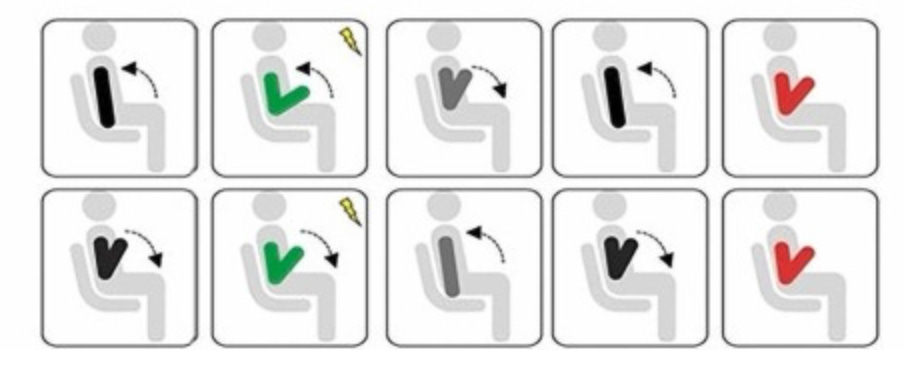
The paper I should read today attempts to tackle exactly this issue, by evaluating a previously developed dynamic version of the JPR test. The interesting thing, at least for a novice of the topic like me, is that the subject is instructed to follow the correct position by using a non-visual stimulus (i.e. an electrical stimulation occurring at the time in which the training position is actually reached).
This paper might be interesting in helping designing new protocols for device training, in which all the algorithms are based on an internal sense (proprioception), rather than external instructions or standard biofeedback.